




Good, working brakes are essential for safe driving, as they give you the peace of mind that you can stop your Chevy whenever you need to. Braking components will become worn or damaged over time and will need replacement. As your Chevy dealer, we want to tell you about some signs you need to visit us for a brake inspection.
Signs You Need a Brake Inspection at Your Chevy Dealer
Brake Warning Light
The brake warning light illuminates if a problem is detected in the braking system. Sensors are connected to all the important components and monitor them to ensure they’re working correctly. If something goes wrong with a component, its connected sensor will immediately inform your computer. The computer will then illuminate the brake warning light.
This light will also illuminate if your handbrake is still active when your engine is running. If you release the handbrake and the light remains on, our technicians will investigate. We’ll connect a diagnostic scanner to your computer and read the error codes listed there. Once we identify the problem with the codes, we’ll repair it, and the right will go out.
Hard Brake Pedal
You’ll always feel resistance when you press down on the brake pedal, and this resistance increases as you apply more pressure. The resistance is caused by pressurized brake fluid. If you push down on the pedal, and it barely moves, you have a problem with a component called the brake pedal booster.
The brake pedal booster is located between your brake pedal and the rest of the system. It uses a vacuum system to generate 10x the force you apply to the pedal. This additional force allows the brakes to work effectively. If the booster is damaged and its vacuum is compromised, it’s very difficult to apply the brakes. We’ll examine the booster and repair or replace it to fix this problem.
Grinding Noises
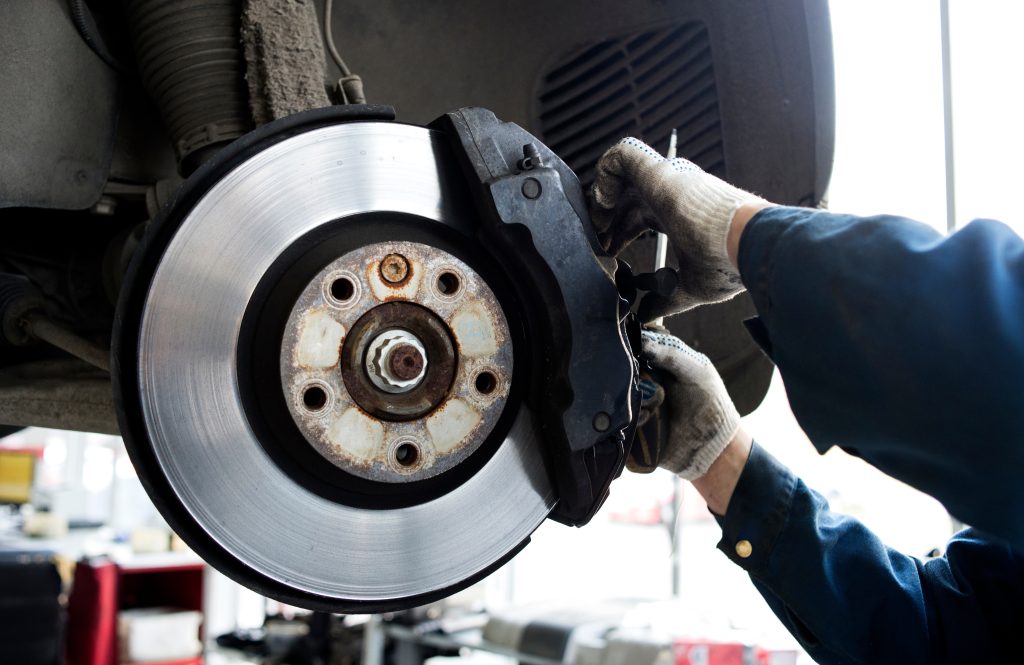
If you hear harsh grinding noises when you brake, something could be trapped in a brake rotor, or at least one brake pad has worn out. A stone or other hard object thrown up from the road surface can lodge in a brake caliper and will make grinding noises when the caliper is forced against the rotor. We can easily fix this by removing the object.
The second cause of grinding noises is a brake pad that has completely worn down. Each pad has a friction-producing material covering that’s 1/2″ thick. Once the material drops to 1/4″ thickness, the pad needs replacement and will produce screeching noises. If the pad isn’t replaced, the material will wear off and the metal pad will gouge the rotor surface. We’ll replace the pads and repair any damaged rotors.
If you have a brake problem, visit the experts today at Jim Turner Chevrolet in McGregor, TX.
Connect with us

